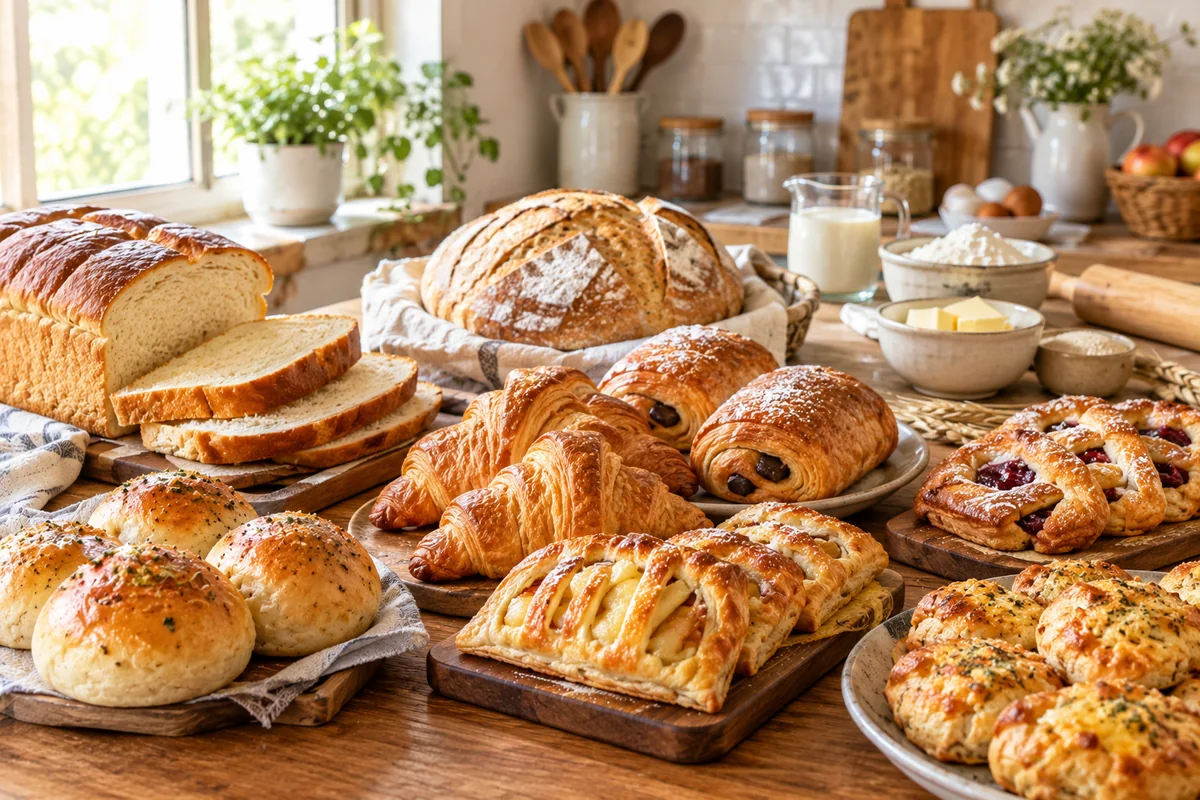
Bread and pastry recipes are a wonderful way to enjoy fresh homemade baking without using complicated ingredients. From soft, fluffy bread to golden, buttery pastries, you can prepare delicious baked treats in your own kitchen. Homemade baking also allows you to control the ingredients and adjust the flavours to suit your family’s taste.
If you are new to baking, do not worry. Many bread and pastry recipes are easier than they look. You mainly need accurate measurements, a little patience, and the right oven temperature. Once you understand the basic steps, making bread and pastries at home becomes much more enjoyable.
In this guide, you will learn how to make soft homemade bread and simple buttery pastries. Both recipes use everyday ingredients and include preparation time, baking time, temperature, servings, and easy instructions.
Why Try Homemade Bread and Pastry Recipes?
Homemade bread is soft, fresh, and perfect for breakfast, sandwiches, and snacks. You can serve it with butter, jam, eggs, or your favourite spread. Fresh bread also fills the kitchen with a lovely smell while it bakes.
Pastries are equally enjoyable. Their golden outside and buttery texture make them suitable for tea time, family gatherings, and special occasions. You can serve them plain or fill them with chocolate, jam, cheese, or other favourite ingredients.
The best part is that you do not need to be a professional baker. Start with simple recipes and practise the basic techniques. With time, you will learn how dough should feel and how to recognise when baked goods are ready.
Recipe 1: Soft Homemade Bread
This soft homemade bread recipe is ideal for beginners. It produces a light loaf with a tender inside and a golden crust. You can use it for toast, sandwiches, or serving alongside soups and other meals.
Ingredients
- 3 cups (375 g) all-purpose flour or bread flour
- 1 cup (240 ml) warm water
- 2¼ teaspoons (7 g) instant yeast
- 2 tablespoons (25 g) sugar
- 1 teaspoon salt
- 2 tablespoons (30 ml) vegetable oil or melted butter
Recipe Details
- Prep time: 20 minutes
- Rising time: 1–1½ hours
- Bake time: 25–30 minutes
- Temperature: 375°F (190°C)
- Servings: 1 loaf, about 8–10 slices
Method
Step 1: Prepare the yeast mixture
Pour the warm water into a large mixing bowl. Add the instant yeast and sugar, then stir gently. If you are using instant yeast, you can usually add it directly to the flour as well. The water should feel warm, not hot, because excessive heat can damage the yeast.
Step 2: Add the remaining ingredients
Add the flour, salt, and oil or melted butter. Mix with a wooden spoon until a rough dough forms. If the dough seems slightly sticky, avoid adding too much extra flour immediately. A soft dough usually produces softer bread.
Step 3: Knead the dough
Transfer the dough to a lightly floured surface. Knead for about 8–10 minutes until it becomes smooth and elastic. You can also use a stand mixer with a dough hook if you have one.
Good kneading helps develop the gluten, which gives the bread structure. The dough should feel soft and stretchy rather than hard or dry.
Step 4: Let the dough rise
Place the dough in a lightly oiled bowl and cover it with a clean kitchen towel or plastic wrap. Leave it in a warm place for about 1–1½ hours, or until it has doubled in size. The exact time depends on your kitchen temperature.
Step 5: Shape the loaf
Gently press the dough to release some air. Shape it into a loaf and place it in a greased loaf pan. Cover it again and leave it to rise for another 25–40 minutes, until it looks puffy.
Step 6: Bake the bread
Preheat the oven to 375°F (190°C). Bake the loaf for 25–30 minutes, until the top is golden brown and the bread is cooked through. If you have a food thermometer, the centre should reach approximately 190–200°F (88–93°C).
Step 7: Cool before slicing
Remove the bread from the pan and place it on a wire rack. Allow it to cool before slicing. Cutting bread while it is very hot can make the inside appear sticky or compressed.
Tips for Soft Homemade Bread
- Measure the flour carefully to avoid making the dough too dry.
- Use warm water, not hot water, when working with yeast.
- Give the dough enough time to rise.
- Knead until the dough becomes smooth and elastic.
- Keep the loaf covered while it rises so the surface does not dry out.
- Let the bread cool before storing it in a sealed bag or container.
- For a richer flavour, replace the oil with melted butter.
Recipe 2: Easy Homemade Butter Pastries
These simple butter pastries have a lightly crisp outside and a tender, rich texture. They are suitable for breakfast, tea time, or serving to guests. This beginner-friendly recipe does not require complicated pastry techniques.
The dough can be shaped into small rounds or squares. You can also add a little jam or chocolate to the centre before folding the pastry, but keep the filling amount small to prevent leaking.
Ingredients
- 2 cups (250 g) all-purpose flour
- ½ cup (115 g) cold unsalted butter, cut into small cubes
- ¼ cup (50 g) sugar
- 1 egg
- 2–3 tablespoons (30–45 ml) cold milk
- 1 teaspoon vanilla extract
- ½ teaspoon baking powder
- A pinch of salt
- 1 egg yolk mixed with 1 teaspoon milk, for brushing (optional)
Recipe Details
- Prep time: 20 minutes
- Chilling time: 20 minutes
- Bake time: 15–20 minutes
- Temperature: 375°F (190°C)
- Servings: About 12 small pastries
Method
Step 1: Mix the dry ingredients
Place the flour, sugar, baking powder, and salt in a large bowl. Stir until the ingredients are evenly combined.
Step 2: Add the cold butter
Add the cold butter cubes to the flour mixture. Rub the butter into the flour using your fingertips until the mixture resembles coarse crumbs. Small pieces of butter help give the pastries a pleasant texture.
Try to work quickly so the butter does not become too warm.
Step 3: Add the wet ingredients
In a small bowl, beat the egg with the vanilla extract. Add it to the flour mixture and stir gently. Add cold milk one tablespoon at a time until the dough begins to come together.
Do not knead the dough too much. Overworking it can make the pastries firm instead of tender.
Step 4: Chill the dough
Shape the dough into a flat disc, cover it, and place it in the refrigerator for 20 minutes. Chilling makes it easier to roll and helps the butter stay firm.
Step 5: Shape the pastries
Lightly flour your work surface. Roll the dough to about ¼ inch (6 mm) thick. Cut it into small squares, circles, or rectangles and arrange them on a lined baking tray.
If you want a golden finish, brush the tops lightly with the egg yolk and milk mixture.
Step 6: Bake until golden
Preheat the oven to 375°F (190°C). Bake the pastries for 15–20 minutes, or until the edges and tops turn lightly golden. Baking time may vary depending on the size and thickness of each piece.
Step 7: Cool and serve
Let the pastries rest on the tray for five minutes, then transfer them to a wire rack. Serve them warm or at room temperature with tea, coffee, or milk.
Tips for Better Homemade Pastries
- Use cold butter to help create a tender texture.
- Add milk gradually because different flour brands absorb different amounts of liquid.
- Avoid overworking the dough.
- Chill the dough before rolling and shaping.
- Leave a little space between pastries so they bake evenly.
- Watch the oven closely during the final few minutes.
- Allow the pastries to cool before storing them.
Common Mistakes to Avoid When Baking Bread and Pastries
One common mistake is using water that is too hot for yeast. Hot water can stop the yeast from working properly, which may prevent the bread from rising. Use comfortably warm water instead.
Another mistake is adding too much flour. Extra flour can make bread dense and pastries tough. Add only what is needed to handle the dough, and follow the measurements as closely as possible.
Do not rush the rising process when making bread. Dough needs time to develop its texture and flavour. If your kitchen is cold, it may take longer to rise.
For pastries, warm butter can make the dough greasy and difficult to handle. If the dough becomes too soft while shaping, return it to the refrigerator for a short time.
Finally, make sure your oven is fully preheated. Starting in an oven that is not hot enough can affect the texture and baking time.
How to Store Homemade Bread and Pastries
Allow bread and pastries to cool completely before storing them. Bread can be kept in a sealed bag or airtight container at room temperature for around 2–3 days. For longer storage, slice the loaf and freeze the slices in a freezer-safe bag.
Butter pastries are best enjoyed fresh, but you can keep them in an airtight container at room temperature for about 2 days, depending on the ingredients and room conditions. Refrigerate pastries if their filling contains ingredients that require refrigeration.
To refresh bread, warm a slice in the toaster or heat the loaf briefly in the oven. Pastries can also be warmed for a few minutes to improve their texture. Always check that stored baked goods have no signs of mould or spoilage before eating.
Frequently Asked Questions
Can beginners make bread and pastry recipes at home?
Yes. Beginners can make simple bread and pastries with basic ingredients and clear instructions. Start with easy recipes, measure accurately, and follow the rising and baking times carefully.
Why is my homemade bread dense?
Bread may become dense if the yeast is inactive, the dough has not risen enough, or too much flour has been added. Make sure your yeast is fresh, use warm rather than hot water, and allow the dough to rise until it has doubled in size.
How do I make homemade pastries flaky or tender?
Use cold butter, avoid overworking the dough, and chill it before baking. These steps help create a tender texture. Traditional laminated pastries need additional folding and chilling to develop distinct flaky layers.
Can I prepare bread or pastry dough ahead of time?
Yes. Bread dough can often be refrigerated for a slow rise overnight, provided it is covered well and the recipe is suitable for refrigeration. Pastry dough can also be prepared in advance and chilled. Let the dough soften slightly if it becomes too firm to roll.
Final Thoughts
Bread and pastry recipes are a great starting point for anyone who wants to enjoy fresh homemade baking. Soft bread is perfect for everyday meals, while buttery pastries make a lovely addition to breakfast and tea time.
The key to success is simple: use accurate measurements, handle the dough gently, give yeast enough time to rise, and bake at the recommended temperature. Do not worry if your first loaf or batch of pastries is not perfect. Each attempt will help you understand the dough and improve your baking skills.
Try these easy homemade baking ideas, experiment with different shapes and flavours, and enjoy sharing your fresh bread and pastries with family and friends.
Soft Vanilla Cupcakes | Easy Buttercream Frosting Recipe
BBC Good Food – Baking Recipes