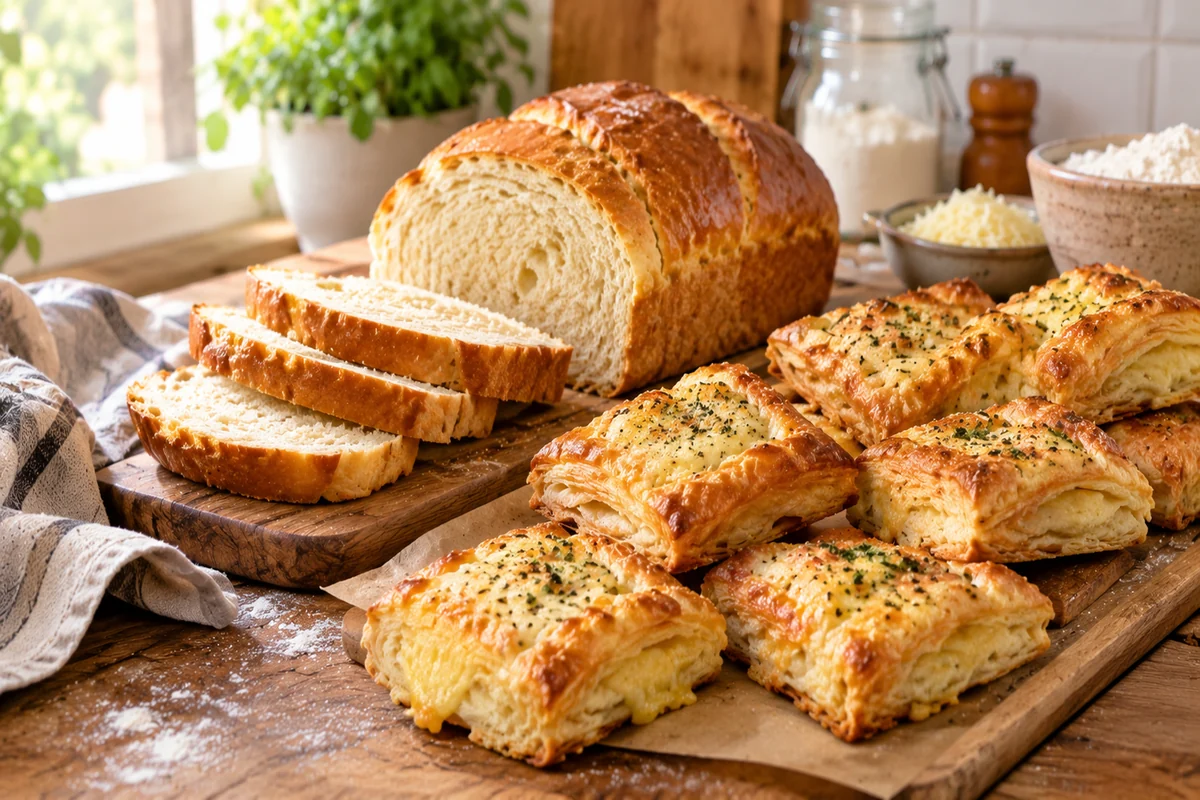
Homemade Breads and Pastries are a delicious way to enjoy fresh baking in your own kitchen. You do not need to be an expert baker or use expensive ingredients to make tasty bread and crispy pastries. With a few basic ingredients and simple steps, you can prepare homemade treats for breakfast, afternoon snacks, or family gatherings.
Freshly baked bread has a soft inside and a golden crust that tastes wonderful with butter, jam, eggs, or soup. Pastries offer something different, with flaky layers and tasty fillings that everyone can enjoy. The best part is that you can adjust the flavors to suit your family’s preferences.
In this guide, you will learn how to make soft homemade bread and easy cheese puff pastries. Both recipes use simple ingredients and beginner-friendly methods. You will also find useful baking tips to help you get better results every time Homemade Breads and Pastries.
Why Make Homemade Breads and Pastries?
Making bread and pastries at home gives you more control over the ingredients. You can choose your favorite flavors, adjust the seasoning, and prepare fresh food whenever you want. Homemade baking can also be a fun activity to enjoy with family.
Another advantage is that many baking ingredients are easy to find. Flour, yeast, sugar, salt, butter, and cheese are common kitchen ingredients that can be used in many recipes.
If you are new to baking, start with simple recipes and follow the measurements carefully. As you gain confidence, you can experiment with different fillings, herbs, and shapes.
Recipe 1: Soft Homemade Bread
This soft homemade bread is perfect for everyday meals. It has a tender texture, a golden crust, and a mild flavor that works well with both sweet and savory toppings. You can use it for sandwiches, toast, or serve it alongside your favorite soup.
Ingredients
- 3 cups all-purpose flour (about 375 g)
- 1 cup warm water (240 ml)
- 2 teaspoons instant yeast
- 2 tablespoons sugar
- 1 teaspoon salt
- 2 tablespoons cooking oil or melted butter
Recipe Details
- Prep time: 20 minutes
- Rising time: 1 hour to 1 hour 15 minutes
- Bake time: 25–30 minutes
- Temperature: 375°F (190°C)
- Servings: 8–10 slices
Method
Step 1: Prepare the yeast
Pour the warm water into a large mixing bowl. Add the sugar and instant yeast, then stir gently. If you are using active dry yeast, let the mixture stand for 5–10 minutes until it becomes foamy. The water should be warm, not hot.
Step 2: Mix the ingredients
Add the flour, salt, and oil or melted butter to the bowl. Mix everything with a spoon until a rough dough forms. If the dough seems too dry, add one tablespoon of water at a time. If it is very sticky, add a little flour.
Step 3: Knead the dough
Place the dough on a lightly floured surface. Knead it for 8–10 minutes until it becomes smooth and elastic. Kneading helps develop the gluten, which gives the bread its structure and soft texture.
Step 4: Let the dough rise
Place the dough in a lightly oiled bowl and cover it with a clean kitchen towel. Leave it in a warm place for about 1 hour, or until it doubles in size. The rising time may change depending on the temperature of your kitchen.
Step 5: Shape the bread
Gently press the dough to release large air bubbles. Shape it into a loaf and place it in a greased loaf pan. Cover it again and let it rise for another 20–30 minutes.
Step 6: Bake the bread
Preheat your oven to 375°F (190°C). Bake the loaf for 25–30 minutes until the top is golden brown. The bread should sound hollow when tapped gently. If you have a food thermometer, the center should reach approximately 190–200°F (88–93°C).
Step 7: Cool and serve
Remove the bread from the oven and allow it to rest in the pan for a few minutes. Transfer it to a cooling rack and let it cool before slicing. Serve with butter, jam, eggs, or your favorite sandwich filling.
Tips for Perfect Homemade Bread
- Measure the flour carefully to avoid a heavy loaf.
- Use warm water instead of hot water to protect the yeast.
- Knead the dough until it feels smooth and elastic.
- Give the dough enough time to rise.
- Avoid cutting the bread while it is very hot, as the inside may become gummy.
- Store completely cooled bread in an airtight bag at room temperature for around 2–3 days.
Recipe 2: Easy Cheese Puff Pastries
Cheese puff pastries are a great choice when you want a quick and tasty snack. They have crispy, flaky layers and a flavorful cheese filling. Using ready-made puff pastry makes this recipe simple, even if you have never prepared pastries before.
These pastries are perfect for breakfast, tea time, lunchboxes, or parties. You can serve them on their own or with tomato sauce, yogurt dip, or your favorite chutney.
Ingredients
- 1 sheet ready-made puff pastry (about 250–300 g), thawed
- 1 cup shredded cheddar or mozzarella cheese (about 100–120 g)
- 2 tablespoons finely chopped spring onions (optional)
- ½ teaspoon dried mixed herbs
- ¼ teaspoon black pepper
- 1 egg, beaten, for brushing
- 1 tablespoon sesame seeds (optional)
Recipe Details
- Prep time: 15 minutes
- Bake time: 18–22 minutes
- Temperature: 400°F (200°C), or follow the pastry package instructions
- Servings: 8 small pastries
Method
Step 1: Prepare the oven
Preheat the oven to 400°F (200°C). Line a baking tray with baking paper. Make sure the puff pastry has thawed but is still cool. Cold pastry is easier to handle and helps create flaky layers.
Step 2: Prepare the filling
Place the shredded cheese in a bowl. Add the chopped spring onions, mixed herbs, and black pepper. Mix everything together. Cheddar gives a stronger flavor, while mozzarella creates a softer, stretchy filling.
Step 3: Cut the pastry
Place the puff pastry on a lightly floured surface. Cut it into eight equal squares. Try to keep the squares similar in size so they bake evenly.
Step 4: Fill the pastry squares
Place a small amount of cheese mixture in the center of each square. Do not add too much filling because it may leak out during baking.
Step 5: Fold and seal
Fold each square into a triangle or rectangle. Press the edges together with your fingers, then use a fork to seal them. Make sure the edges are closed properly so the filling stays inside.
Step 6: Add the egg wash
Arrange the pastries on the prepared tray, leaving space between them. Brush the tops with beaten egg. Sprinkle sesame seeds over them if you like a little extra crunch.
Step 7: Bake until golden
Bake for 18–22 minutes, or until the pastries have puffed up and turned golden brown. Check them near the end because oven temperatures can vary.
Step 8: Cool and serve
Remove the pastries from the oven and let them cool for a few minutes before serving. The cheese filling will be very hot straight from the oven. Serve them warm for the best flavor and texture.
Tips for Crispy Cheese Pastries
- Keep the pastry cool while preparing the filling.
- Avoid adding too much cheese to each square.
- Seal the edges firmly to reduce filling leakage.
- Always preheat the oven before baking.
- Do not open the oven door repeatedly while the pastries are rising.
- Reheat leftover pastries in the oven to help restore their crisp texture.
More Ideas for Homemade Breads and Pastries
Once you learn these basic recipes, you can try many other baking ideas. Small changes to the ingredients can create new flavors without making the process complicated.
For bread, try adding dried herbs, garlic, sesame seeds, or a small amount of whole-wheat flour. You can also divide the dough into smaller portions to make dinner rolls. These rolls are ideal for sandwiches, burgers, and family dinners.
For pastries, you can experiment with spinach and cheese, potato, or finely chopped vegetables. If you prefer sweet treats, try suitable pastry recipes with apple and cinnamon or chocolate filling. Avoid fillings that contain too much liquid because they can make the pastry soggy.
You can also prepare smaller pastries for parties. Mini pastries are easy to serve and allow guests to enjoy different flavors. Preparing your fillings in advance can save time when you have a busy day.
Common Baking Mistakes to Avoid
One common mistake when making bread is adding too much flour. Extra flour can make the dough stiff and produce a dense loaf. The dough should be soft and slightly tacky, so add extra flour gradually.
Another mistake is rushing the rising process. Yeast needs enough time to help the dough expand. If your kitchen is cold, the dough may take longer to rise. Look at the dough’s size rather than relying only on the clock.
When making puff pastries, avoid working with pastry that has become warm and soft. Warm pastry can lose its shape and may not rise properly. Keep it cool and place the prepared pastries in the oven promptly.
Finally, remember that every oven is different. Start checking your bread and pastries near the end of the suggested baking time. A golden color and a properly baked center are better signs than the timer alone.
Frequently Asked Questions
Can beginners make homemade bread and pastries?
Yes, beginners can make both recipes by following the instructions carefully. Homemade bread requires kneading and rising time, while cheese puff pastries are easier with ready-made pastry. Accurate measurements and the correct oven temperature help produce better results.
Why does homemade bread sometimes become hard or dense?
Bread may become hard or dense if you add too much flour, use inactive yeast, knead the dough poorly, or do not allow it to rise enough. Measure the ingredients carefully and give the dough enough time to rise before baking.
Can I prepare homemade bread dough and pastries in advance?
Yes. Bread dough can be refrigerated for a slower rise when covered properly. Cheese pastries can also be assembled ahead and refrigerated briefly before baking. Keep the pastry cool and follow the instructions on the package for the best results.
How should I store homemade bread and cheese pastries?
Store completely cooled bread in an airtight bag at room temperature for around 2–3 days. Refrigerate leftover cheese pastries and use them within about 3–4 days. Reheat pastries in the oven for a crispier finish. You can also freeze sliced bread for longer storage.
Final Thoughts
Homemade Breads and Pastries are easier to prepare than many people think. With simple ingredients, clear instructions, and a little patience, you can make soft bread and delicious cheese pastries in your own kitchen Homemade Breads and Pastries.
Start with these two recipes and practice the basic techniques. Once you feel comfortable, try new flavors, fillings, and shapes to suit your family’s taste. Fresh homemade baking is a wonderful way to make everyday meals and special gatherings more enjoyable.
Soft Vanilla Cupcakes | Easy Buttercream Frosting Recipe
BBC Good Food – Baking Recipes